What Lives at the Bottom of the Mariana Trench, and What We Left There
The Mariana Trench in the western Pacific is the deepest ocean trench on Earth: about 2,550 km long and 69 km wide, with a maximum known depth of 10,935 metres at the Challenger Deep. At the bottom the water exerts a pressure about 1,100 times that at sea level, and the temperature is 1 to 4 °C. Yet the trench is not empty.
Life at extreme depth
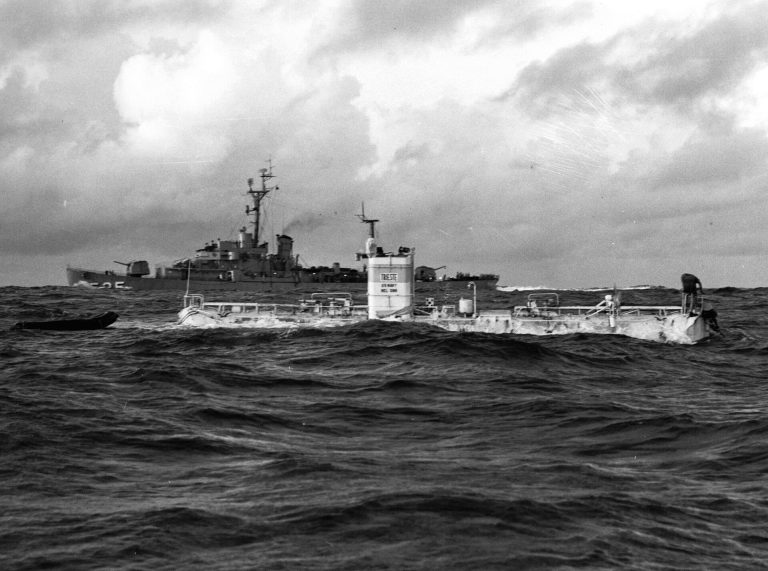
- 1960: the crew of the bathyscaphe Trieste reported seeing a flatfish about 30 cm long and shrimp at the bottom.
- 2011: camera landers filmed xenophyophores, single-celled organisms more than 10 cm across.
- 2014: a new species of snailfish was filmed at 8,145 metres, a record for the deepest fish seen on video. The same expedition filmed “supergiant” amphipods, an example of deep-sea gigantism, in which species grow larger than their relatives in shallow water.
- 2017: the newly named Mariana snailfish was filmed at 8,178 metres.
Researchers from the Scripps Institution of Oceanography have also found single-celled organisms called monothalamea at 10.6 km below the surface.
Pollution at the bottom of the world
The trench is far from untouched. In 2016, crustaceans collected between 7,841 and 10,250 metres were found to carry extremely high concentrations of PCBs, toxic chemicals banned in the 1970s. Later research found that every amphipod examined had at least one piece of synthetic material in its stomach. In 2019 the explorer Victor Vescovo reported a plastic bag and sweet wrappers at the bottom of the trench, and carbon-14 from nuclear bomb tests has been found in animals living there.
Protection
In 2009 the United States created the Mariana Trench Marine National Monument from the parts of the trench inside its exclusive economic zone. The Challenger Deep is not included: it lies in the zone of the Federated States of Micronesia.
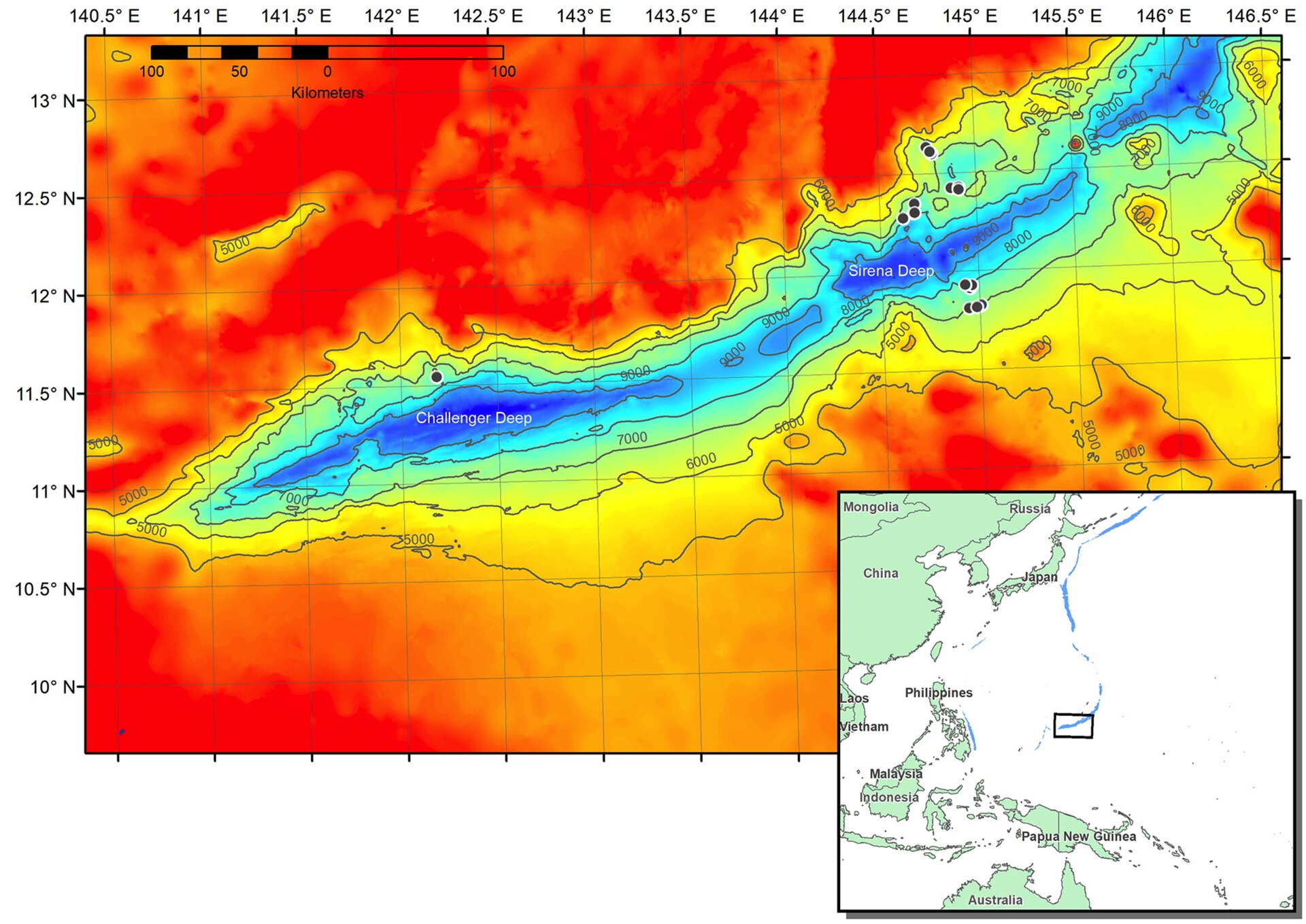
Photo: A map of the places in the Mariana Trench where Mariana snailfish were collected. By Gerringer et al. (2017), Wikimedia Commons, CC BY 3.0.