Franklin’s Lost Expedition: 129 Men, Two Ships and a 170-Year Search
In 1845 two Royal Navy ships, HMS Erebus and HMS Terror, left England under Captain Sir John Franklin to chart the last unnavigated stretch of the Northwest Passage through the Canadian Arctic. They carried 129 officers and men. A whaling ship last sighted them in July 1845. None of them returned.
Well-equipped ships
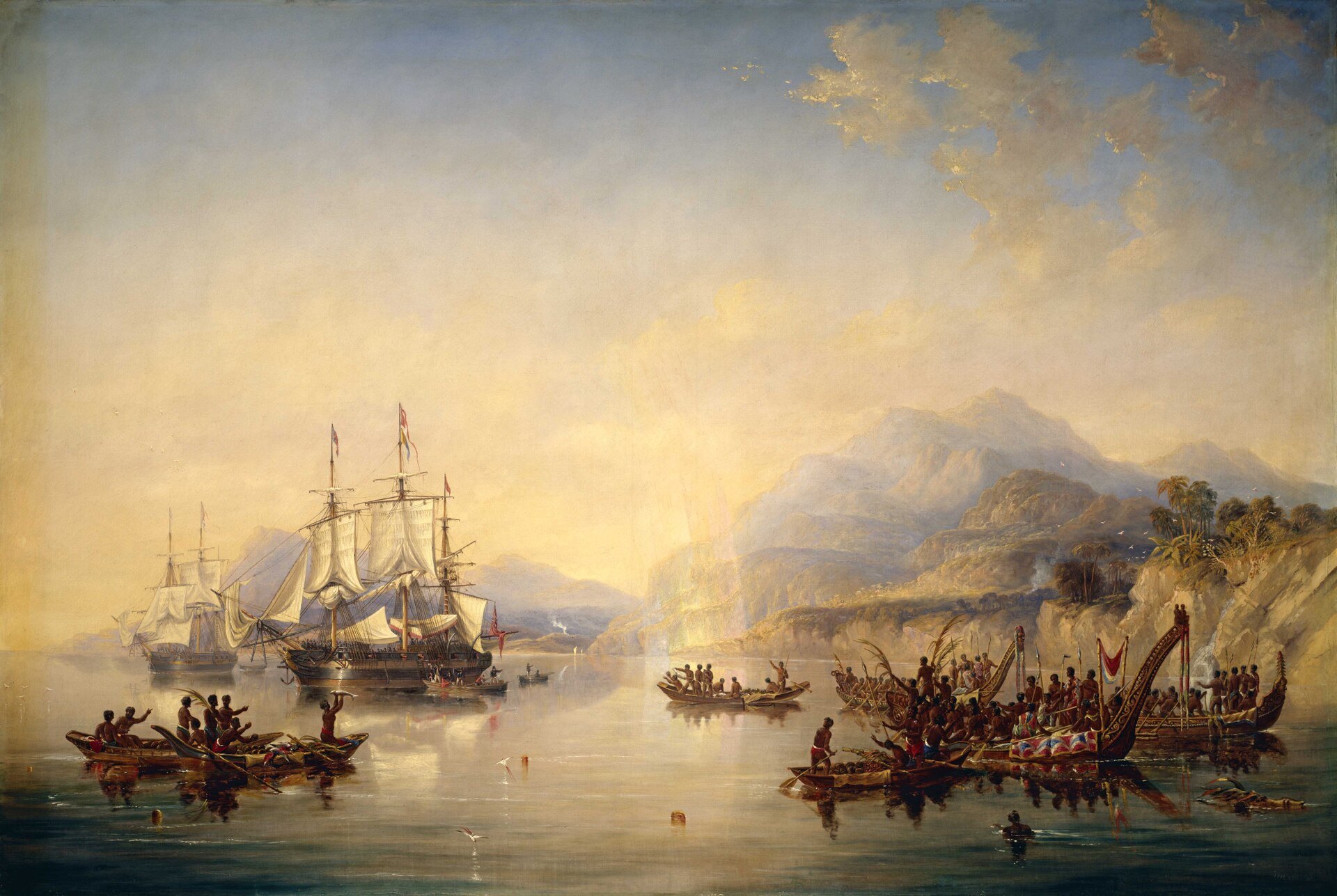
Both ships had served on James Clark Ross’s Antarctic expedition of 1839–1843. For the Arctic they were fitted with steam engines converted from railway locomotives, each driving a screw propeller, iron-reinforced bows and internal steam heating.
What happened
Most of what is known was pieced together over 150 years from later expeditions, scientific studies and interviews with Inuit. The ships wintered at Beechey Island, then became trapped in the ice of Victoria Strait near King William Island, in today’s Nunavut. A note found in a cairn on the island in 1859 records that they had been beset since 12 September 1846 and were deserted on 22 April 1848. By then two dozen men, Franklin among them, had died. The survivors, led by Francis Crozier and James Fitzjames, set out for the Canadian mainland and disappeared.
Modern studies suggest the men did not die quickly. Hypothermia, starvation, lead poisoning or zinc deficiency, and diseases including scurvy all played a part. Cut marks on recovered bones supported reports of cannibalism that the searcher John Rae had brought back in 1854.
The search
Pressed by Franklin’s wife, Jane, the Admiralty began searching in 1848, and searches went on for decades. One of them, led by Robert McClure, found an ice-bound route linking the Atlantic and the Pacific. The passage was first navigated by boat only in 1906, by Roald Amundsen in the Gjøa.
The wrecks found
In 2014 a team led by Parks Canada found the wreck of Erebus in the eastern Queen Maud Gulf. Two years later, in 2016, the Arctic Research Foundation found Terror south of King William Island, in Terror Bay. Both are now protected as a National Historic Site, and divers return to them every year.
Photo: Erebus and Terror in New Zealand in August 1841, during their earlier Antarctic voyage. By James Wilson Carmichael, Wikimedia Commons, Public domain.