The Challenger Expedition: The Voyage That Founded Oceanography
On 21 December 1872 a Royal Navy ship left Portsmouth on a voyage that would lay the foundations of oceanography. Over almost four years, HMS Challenger circled the Earth, sailing about 127,580 kilometres to measure, sample and catalogue the ocean.
A warship turned laboratory
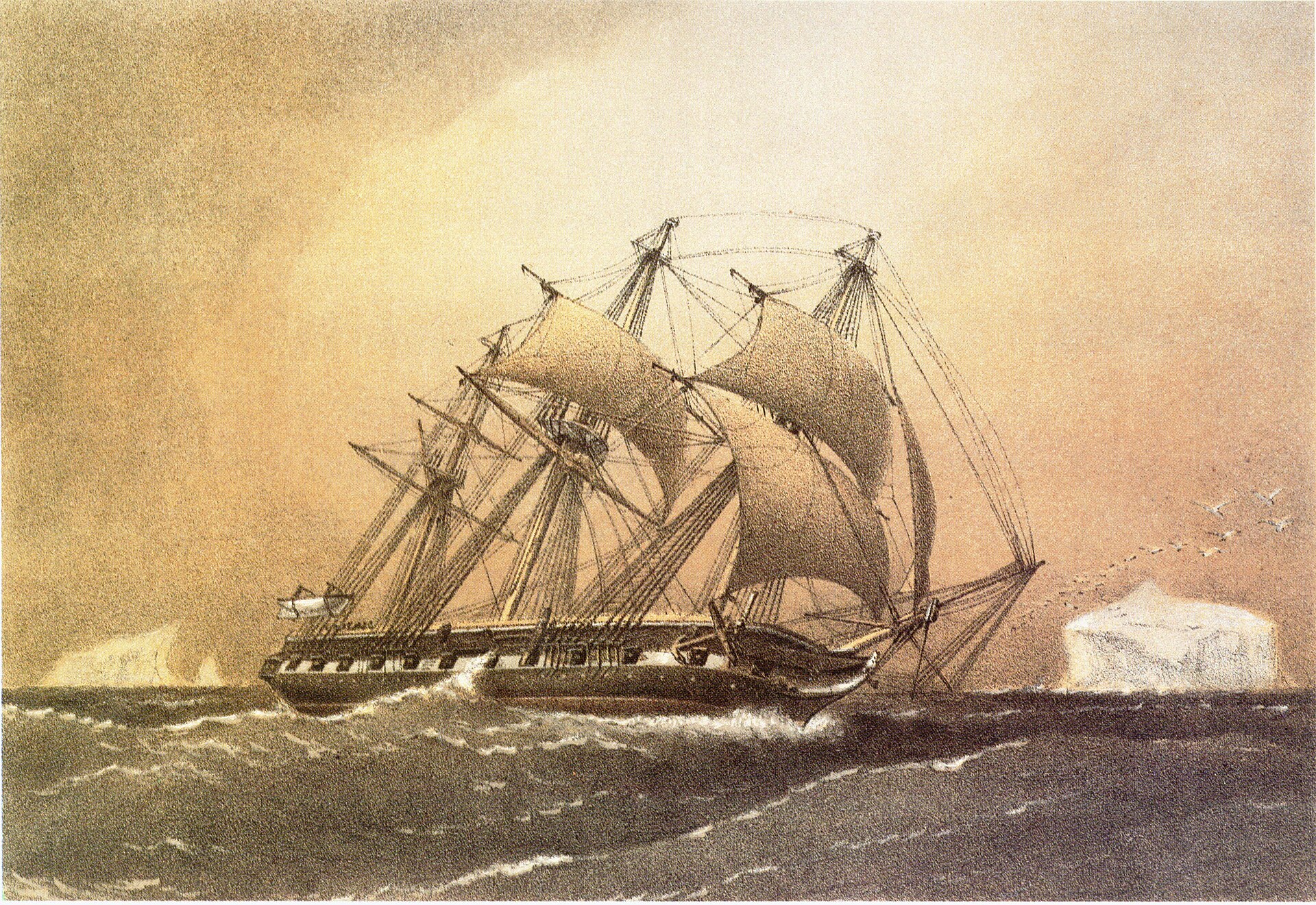
The Royal Society obtained the ship from the Royal Navy and refitted it at Sheerness. Fifteen of its seventeen guns were removed to make space for laboratories for natural history and chemistry, extra cabins and a dredging platform. It carried 291 km of Italian hemp rope for sounding. The ship sailed mostly under canvas; its steam engine was used for dredging, for holding position during soundings and for entering and leaving port.
The voyage was led by Captain George Nares, and its scientific work was directed by Charles Wyville Thomson of the University of Edinburgh, with John Murray, John Young Buchanan, Henry Nottidge Moseley and Rudolf von Willemoes-Suhm.
What it measured
- 492 deep-sea soundings
- 133 dredges of the sea floor
- 151 trawls in open water
- 263 series of water temperature readings
- about 4,700 new species of marine life
The deepest sounding
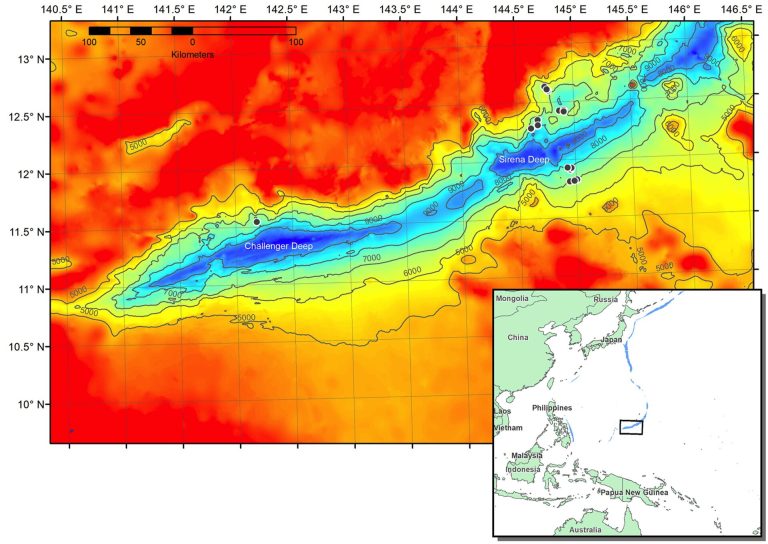
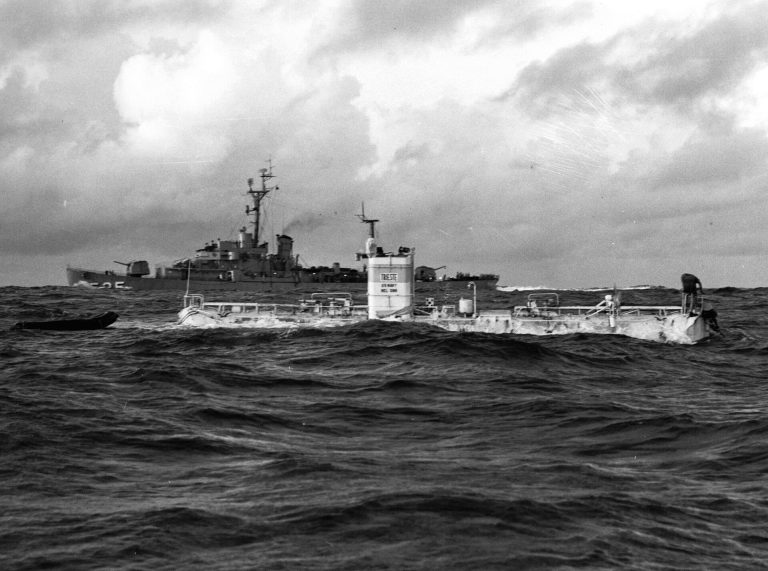
On 23 March 1875, at station 225 between Guam and Palau, the crew recorded a depth of 4,475 fathoms, or 8,184 metres, confirmed by a second sounding. Later expeditions showed the spot lay at the southern end of the Mariana Trench. The deepest point there now bears the ship’s name: the Challenger Deep, where modern soundings have found almost 11 kilometres of water. The expedition also confirmed the existence of the Mid-Atlantic Ridge, and it was the first scientific expedition to photograph icebergs.
The report
The results filled the Report of the Scientific Results of the Exploring Voyage of H.M.S. Challenger. John Murray, who supervised its publication, called it “the greatest advance in the knowledge of our planet since the celebrated discoveries of the fifteenth and sixteenth centuries”.
Photo: HMS Challenger, painted by William Frederick Mitchell. By William Frederick Mitchell, Wikimedia Commons, Public domain.