Hydrothermal Vents: Life on the Sea Floor Without Sunlight
Along the mid-ocean ridges, where tectonic plates pull apart and new crust forms, seawater seeps into the rock, is heated and bursts out again through cracks in the sea floor. These are hydrothermal vents. The surrounding water at these depths is about 2 °C; the water from the vents comes out at anything from 60 °C up to 464 °C. Under the enormous pressure of the deep it stays liquid or becomes a supercritical fluid instead of boiling.
Black smokers
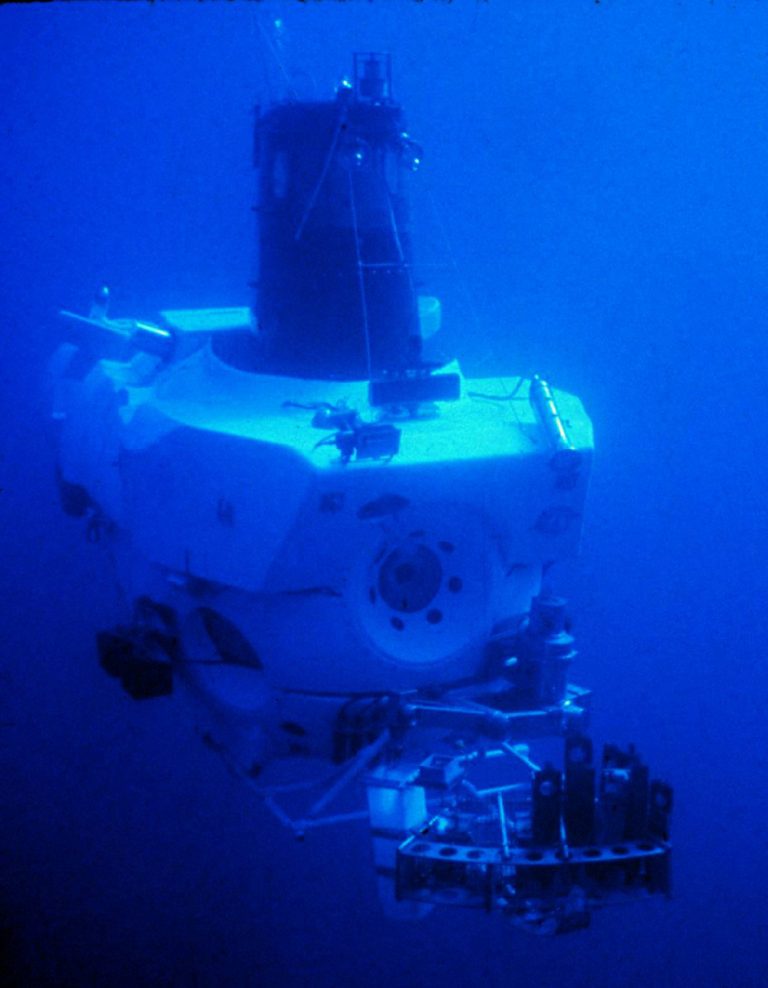
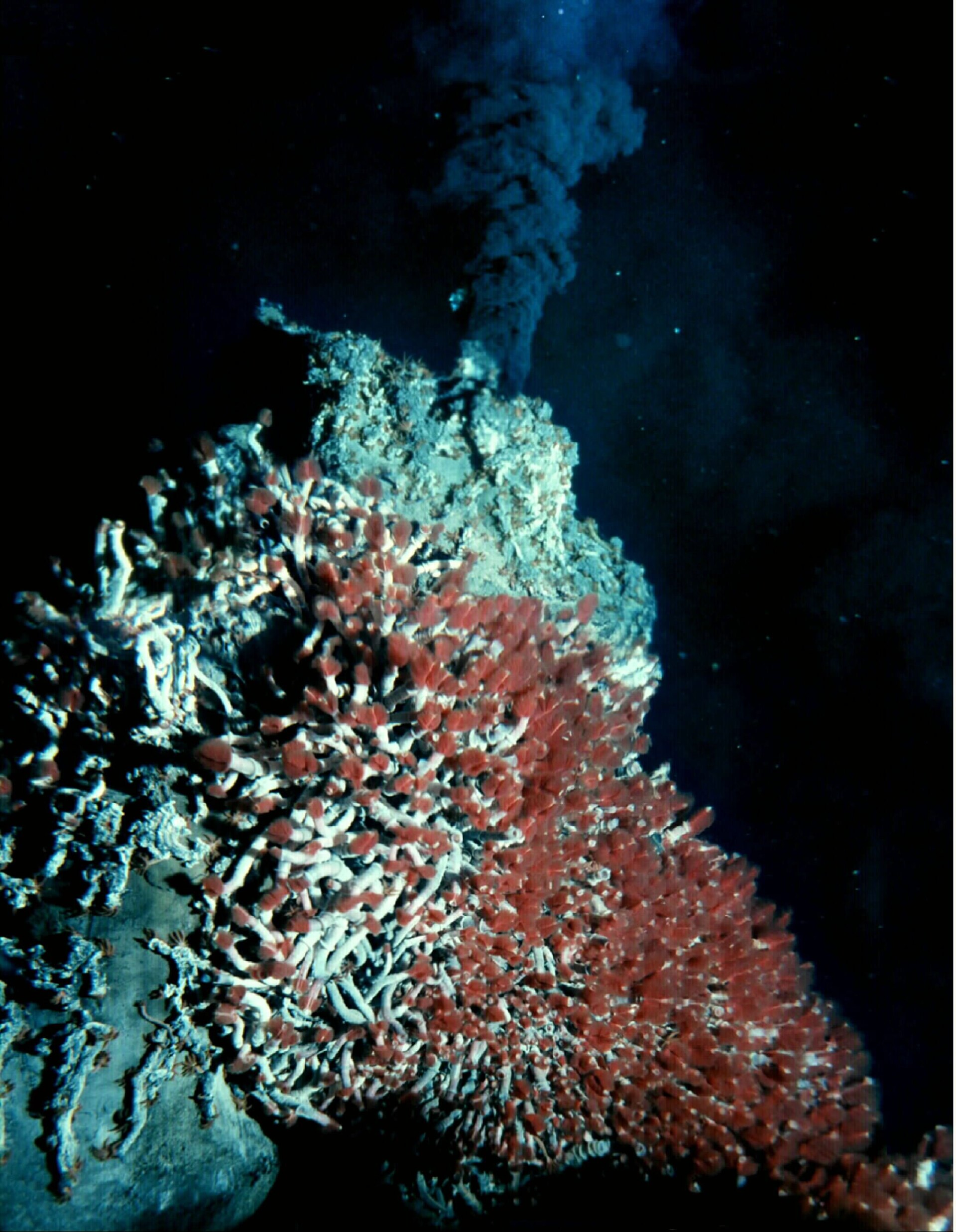
The most striking vents are black smokers: chimneys that pour out a dark cloud of mineral-rich fluid. They were first found in 1979 on the East Pacific Rise by scientists from the Scripps Institution of Oceanography, diving in the submersible Alvin. They are most common at depths of 2,500 to 3,000 metres, and are now known in both the Atlantic and the Pacific.
A food chain built on chemicals
No sunlight reaches the vents. Instead, bacteria and archaea draw energy from chemicals in the vent water, such as hydrogen sulphide and methane, in a process called chemosynthesis. They form the base of the food chain. Compared with most of the deep sea, the areas around vents are rich with life:
- Tube worms that can grow over 2 metres tall in the largest species. They have no mouth or gut and live on nutrients made by bacteria inside their bodies.
- The Pompeii worm, found in the 1980s, which withstands temperatures up to 80 °C.
- The scaly-foot snail, first found in 2001 in the Indian Ocean’s Kairei vent field, which builds the hard plates on its foot from iron sulphides.
- Snails, shrimp, crabs, clams, fish and octopuses that feed on the bacteria or on each other.
One bacterium found near a black smoker off Mexico, at 2,500 metres, uses the faint glow of the vent for photosynthesis.
Beyond the Earth
Some scientists think vents like these may have helped life begin, since their conditions can produce molecules important to life. Active hydrothermal vents are thought to exist on Jupiter’s moon Europa and Saturn’s moon Enceladus.
Photo: Giant red tube worms and squat lobsters around a hydrothermal vent. By University of Washington; NOAA/OAR/OER., Wikimedia Commons, Public domain.