How Sushi Began: From Fish Preserved in Rice to Edo Fast Food
Long before it was a restaurant dish, sushi was a way of keeping fish from rotting. Salted fish was packed in cooked rice and left to ferment, sometimes for months; the rice was then thrown away and the fish eaten. The word itself comes from an old Japanese form meaning “sour-tasting”.
A preserving method from Southeast Asia
Fermenting fish with rice probably began in Southeast Asia, where it was used to preserve freshwater fish in the Mekong and Irrawaddy river basins. The first mention of a similar food is in a Chinese dictionary thought to date from the fourth century. In Japan the method, called narezushi, made sense in the rice fields: during the rainy season fish were caught in the flooded paddies, and pickling them kept food for the months ahead. A version still survives as funa-zushi, a regional speciality of Shiga Prefecture.
Faster and faster
- Muromachi period (1336–1573): namanare, “partially fermented” sushi, shortened the wait, and the rice was now eaten with the fish.
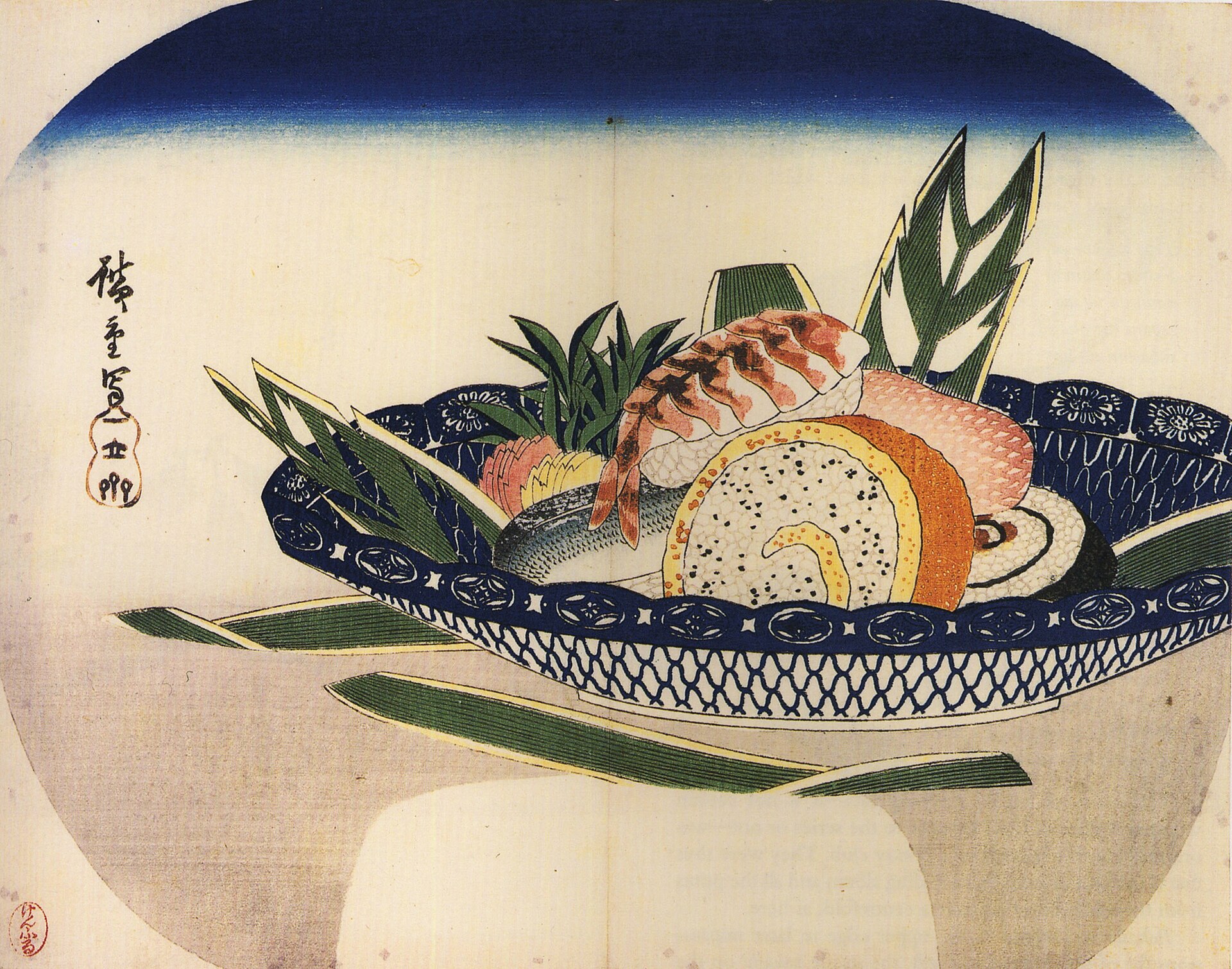
- Edo period (1603–1867): cooks mixed vinegar into the rice instead of waiting for it to ferment. Sushi became a fast food, and rolled sushi (makizushi) and hand-pressed sushi (nigirizushi) date from this time.
- 1820s–1830s: nigiri, a mound of rice with a slice of fish on top, became popular in Edo, today’s Tokyo. The chef Hanaya Yohei is often credited with perfecting it in 1824. The rice portions were about three times the size of today’s.
- 1958: Yoshiaki Shiraishi opened the first conveyor-belt sushi restaurant in Higashi-Osaka. After it won an award at the 1970 World Exposition in Osaka, the format spread across Japan.
From Tokyo to the rest of the world
In December 2013 UNESCO added washoku, the traditional food culture of Japan, to its list of the Intangible Cultural Heritage of Humanity. Sushi itself has long since left Japan and picked up local habits on the way. In Albania’s capital, for example, Ginger Sushi on Rr. Jusuf Vrioni in Tirana serves nigiri and rolls next to poke bowls, a dish of cut raw fish that comes from Hawaii rather than Japan.
Photo: “Bowl of Sushi”, a woodblock print by Utagawa Hiroshige. By Utagawa Hiroshige, Wikimedia Commons, Public domain.