Turning the Tide: How Tidal Power Stations Make Electricity
Tidal power turns the rise and fall of the sea into electricity. Its great advantage is predictability: the tides can be forecast far more reliably than wind or sunshine. Its drawbacks have been high costs and the small number of places where the tidal range, or the speed of the current, is large enough.
The idea is old. Tide mills, which stored incoming water in ponds and released it through a waterwheel to grind grain, were used in Europe and on the Atlantic coast of North America from the Middle Ages, and possibly from Roman times.
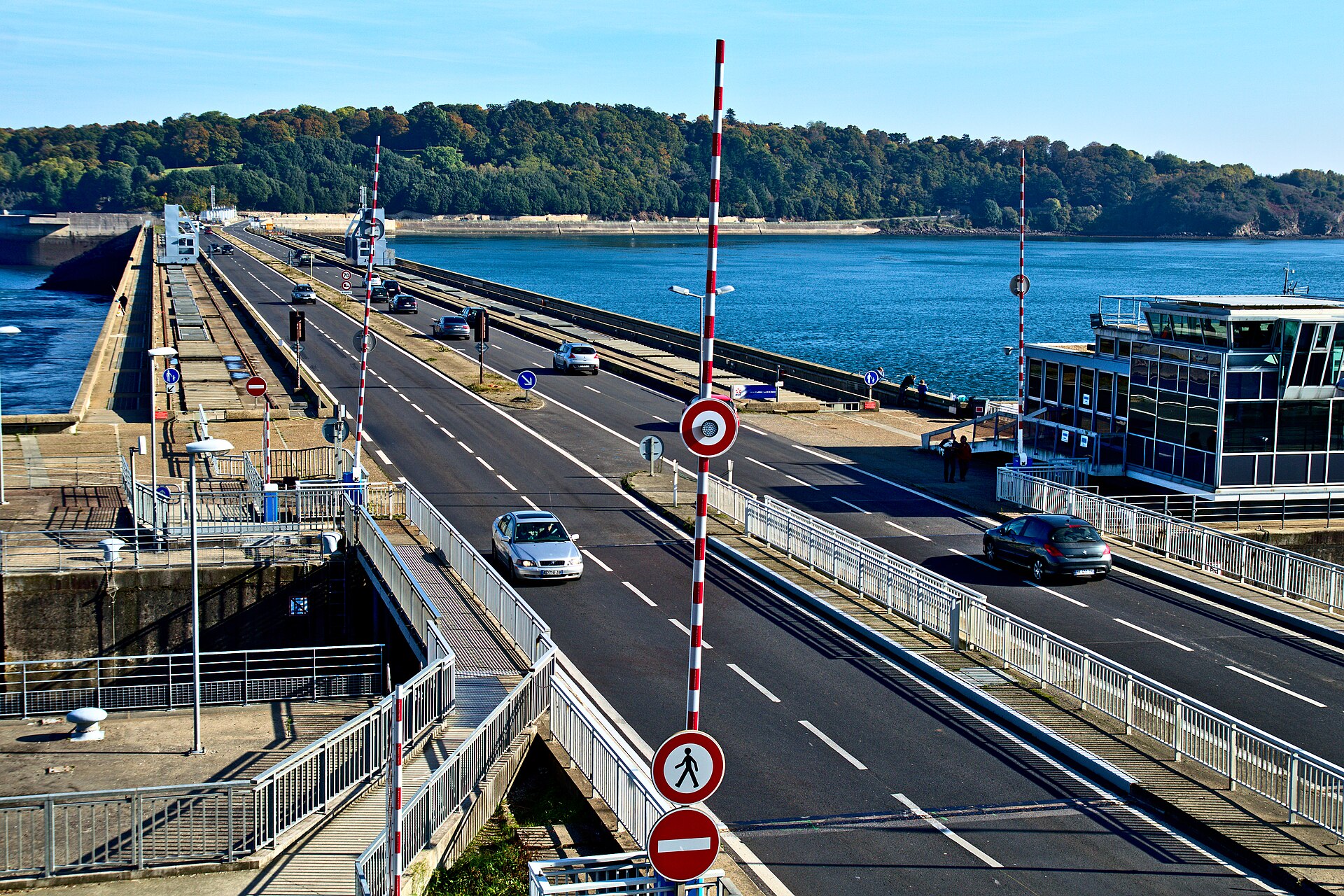
Rance, France: the first, in 1966
The Rance Tidal Power Station, on the estuary of the Rance in Brittany, opened in 1966 as the world’s first tidal power station. The site was chosen for its large tides: an average range of 8 metres and up to 13.5 metres at the highest spring tides.
- A 750-metre barrage holds 24 turbines, with a peak output of 240 MW.
- It produces about 500 GWh a year, around 0.12% of France’s electricity demand.
- It was the largest tidal power station in the world for 45 years.
Sihwa Lake, South Korea: the largest, since 2011
The Sihwa Lake Tidal Power Station overtook Rance in 2011 with 254 MW from ten 25.4 MW turbines. It was built into a seawall that had been raised in 1994 for flood control and farming, and it cost US$560 million, paid by the South Korean government. It generates only on the incoming tide. The plant had a second purpose: the seawall had left the lake behind it badly polluted, and letting the sea flow in and out was meant to help flush it clean.
MeyGen, Scotland: turbines on the seabed
A different approach needs no dam. MeyGen, in the Inner Sound of the Pentland Firth between the island of Stroma and the Scottish mainland, uses turbines placed on the seabed in a fast current that reaches up to 5 m/s. Its first four turbines, each rated at 1.5 MW with 18-metre rotors, were installed in the winter of 2016–17, and there are plans for up to 400 MW at the site.
Photo: The Rance tidal barrage between Dinard and Saint-Malo, Brittany. By Sw271149, Wikimedia Commons, CC BY-SA 4.0.