Can Waste Plastic Be Turned Back Into Fuel?
Turning waste plastic into fuel sounds like alchemy. It can be done. Whether it pays, and how much it helps, are harder questions.
How it works
The usual method is pyrolysis: heating a material in the absence of oxygen so that it breaks down instead of burning. When mixed plastic waste is treated this way, it gives a broad mix of products, from gases to aromatic liquids, with molecules of between 1 and 15 carbon atoms. Catalysts can produce a more uniform, more valuable product. The liquid can be used as a synthetic diesel fuel, and it is made commercially in several countries.
What it can and cannot do
- Emissions: life-cycle studies show that plastic-to-fuel can replace fossil fuel and cut net greenhouse gas emissions by about 15%.
- PVC is a problem: it releases large amounts of hydrogen chloride when heated, which corrodes equipment and contaminates the fuel, so it must be removed or treated.
- Cost: plastic-to-fuel has struggled to become economically viable. Burning plastic waste for energy in incinerators remains the most common method of recovering energy from it.
Where it fits
Plastic-to-fuel is one of several ways to deal with plastic once it has been used. Mechanical recycling melts plastic down to make new products. Chemical, or feedstock, recycling breaks plastic down into its original building blocks to make fresh plastic, but it is far less common: in 2018 Japan, one of the highest, recycled about 4% of its plastic this way, against 23% mechanically, while Germany reported 0.2%.
The scale of the waste explains the interest. In 2012 the European Union collected 25.2 million tonnes of post-consumer plastic waste. About 6.6 million tonnes were recycled; around 9 million tonnes were burned for energy.
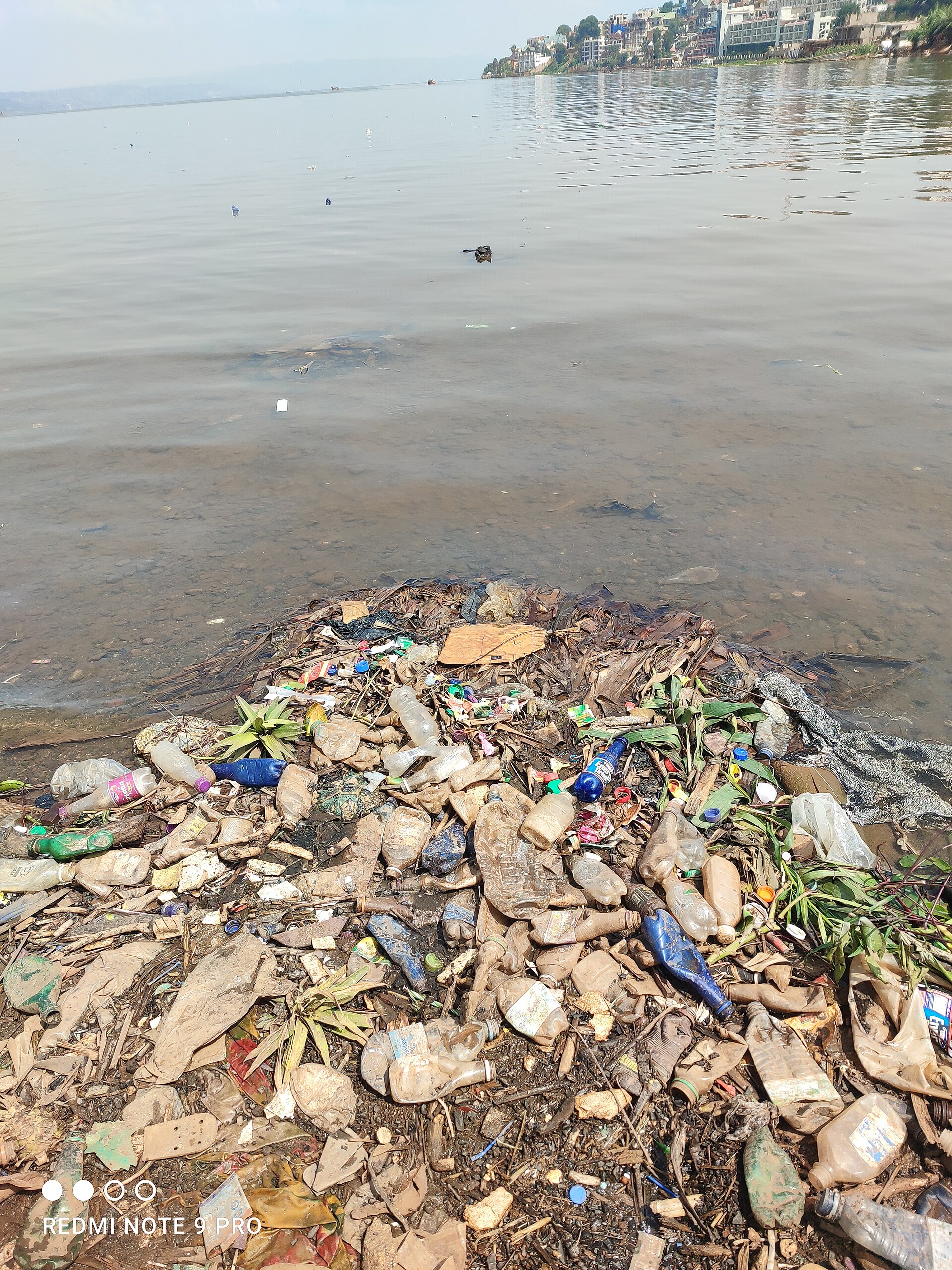
Photo: Bottles, wrappers and other waste piled up at the water’s edge. By Merstel007, Wikimedia Commons, CC0.