Who Counts as Aboriginal? How Australia Has Defined Aboriginal Identity
Aboriginal identity, sometimes called Aboriginality, means seeing oneself as Aboriginal Australian, or being recognised as such by others. Aboriginal Australians are one of the two Indigenous peoples of Australia; the other is the Torres Strait Islanders. Many people prefer a more specific name, such as Murri, Noongar, Kaurna or Yolngu, and the usual practice is to use the name a person prefers.
A word from the settlers
The term “Aborigine” was coined by white settlers in the 1830s from the Latin ab origine, “from the very beginning”. The word appeared twice in Australia’s 1901 Constitution; both references were removed after the 1967 referendum. Yet no serious attempt was made to define it in law until the 1980s.
Dozens of definitions
A legal historian estimated in 1991 that governments had used at least 67 classifications, descriptions or definitions of who was an Aboriginal person since European settlement. Until the 1980s, the only criterion was race, judged by appearance or by known ancestors.
The three-part test
In the 1992 case Mabo v Queensland (No 2), Justice Brennan described a three-part test of Indigenous identity, which is still in use:
- biological descent from the Indigenous people;
- the person’s own identification as a member;
- recognition by elders or others with traditional authority among that people.
Why the numbers are rising
Successive censuses have recorded the number of people identifying as Indigenous growing much faster than the Australian population as a whole. Among the reasons given are a growing pride in culture, solidarity in a shared history of dispossession, including the Stolen Generations, and a greater willingness among fair-skinned people to acknowledge ancestors whose background was once treated as shameful. Who counts as Aboriginal remains a politically sensitive question, among Aboriginal and non-Aboriginal Australians alike.
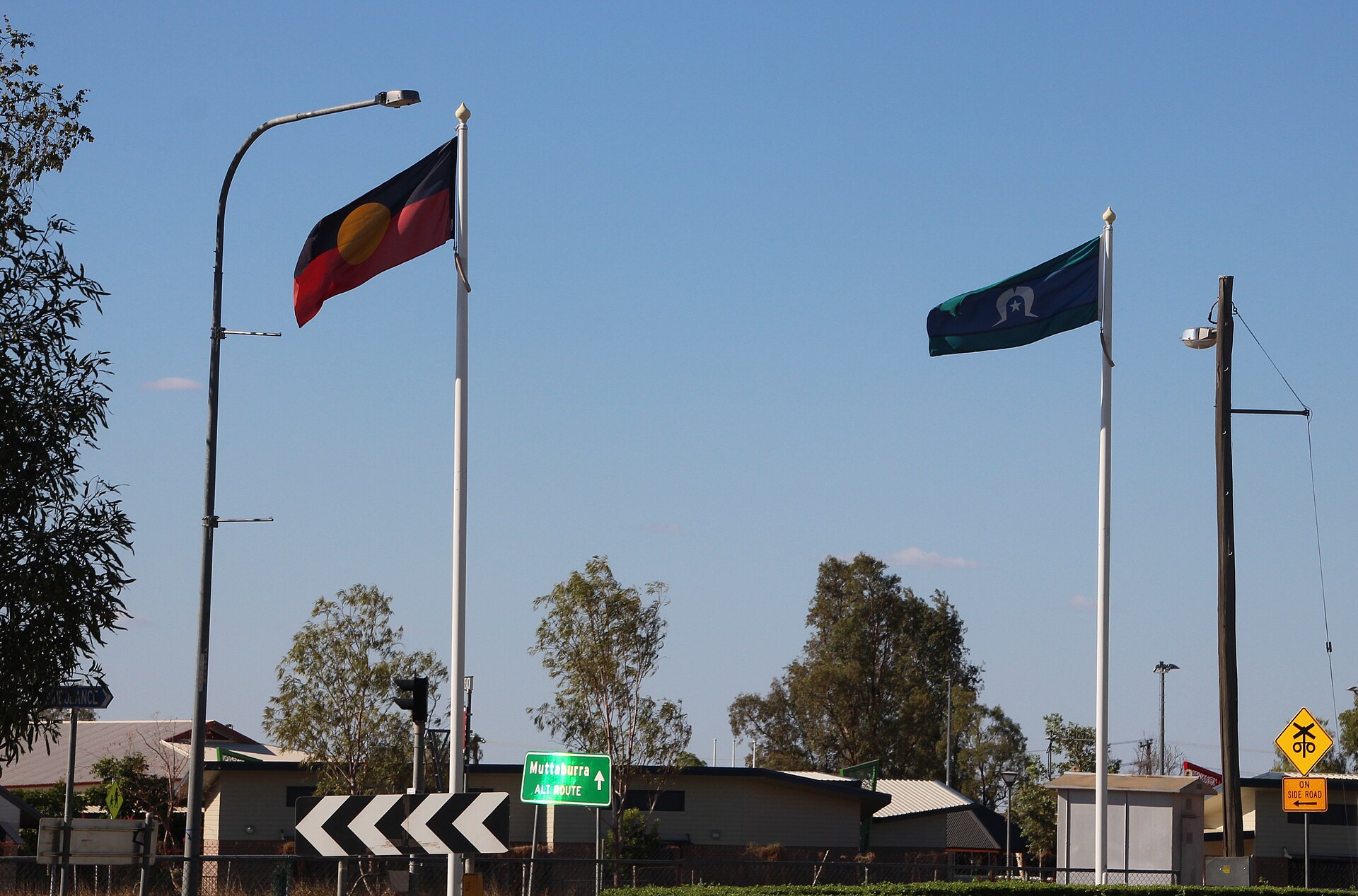
Photo: The Australian Aboriginal and Torres Strait Islander flags flying in Longreach, Queensland, September 2020. By Joshua Ryan, Wikimedia Commons, CC0.