The Korowai: Tree Houses, Sago and First Contact in 1974
The Korowai, who also call themselves Kolufo, live in south-eastern Papua, in the Indonesian provinces of South Papua and Highland Papua. Their land is split between five regencies, and they number about 4,000 to 4,400 people. Most Korowai clans live in tree houses on their isolated forest territory.
“Walking on leg bone”
Their name for themselves, Kolufo-yanop or Klufo-fyumanop, combines kolufo, “people”, with fyumanop, “walking on leg bone”. It sets them apart from the neighbouring Citak and Awyu, who travel by boat. Their language belongs to the Awyu–Dumut family, part of the Trans–New Guinea group.
How they live
- They are horticulturalists who practise shifting cultivation, and skilled hunters and fishers.
- The patriclan is the centre of social, economic and political life. Leadership depends on the personal qualities of “big men” rather than on fixed offices.
- They smoke tobacco in a bamboo pipe called depon nagel, but do not drink alcohol.
- Once in a lifetime, a clan must hold a sago grub festival to bring prosperity and fertility.
Since 1980 some Korowai have moved into new villages such as Yaniruma on the Becking River, Mu and Mbasman, but many stay away for long periods because the villages are far from the sago they live on.
Meeting outsiders
The first documented contact by Western scientists with a band of western Korowai took place on 17–18 March 1974, when an expedition led by the anthropologist Peter Van Arsdale, the geographer Robert Mitton and the community developer Mark Grundhoefer met thirty men on the upper Eilanden River and recorded a basic word list. Dutch missionaries began to live among the Korowai in the late 1970s. For a long time the Korowai were considered unusually resistant to religious conversion; the first converts were baptised at the end of the 1990s.
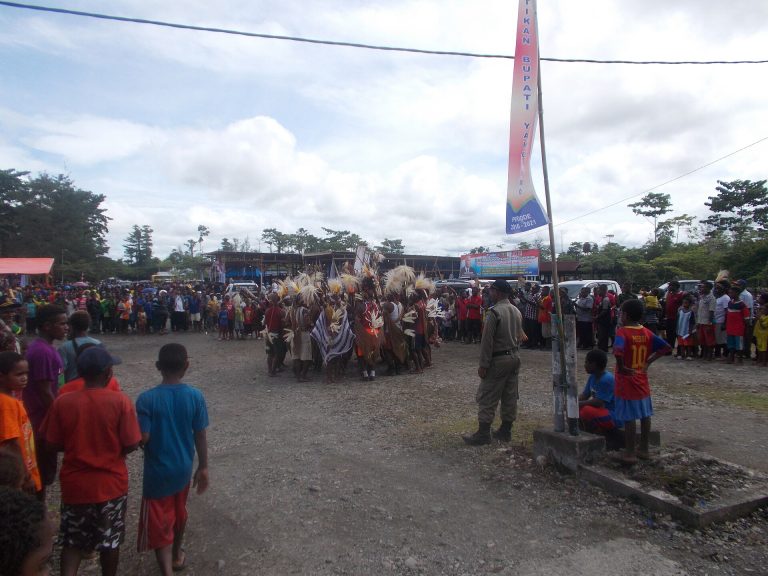
Since the early 1990s, some Korowai have earned money from tour companies by hosting tour groups, carrying luggage and putting on traditional displays.
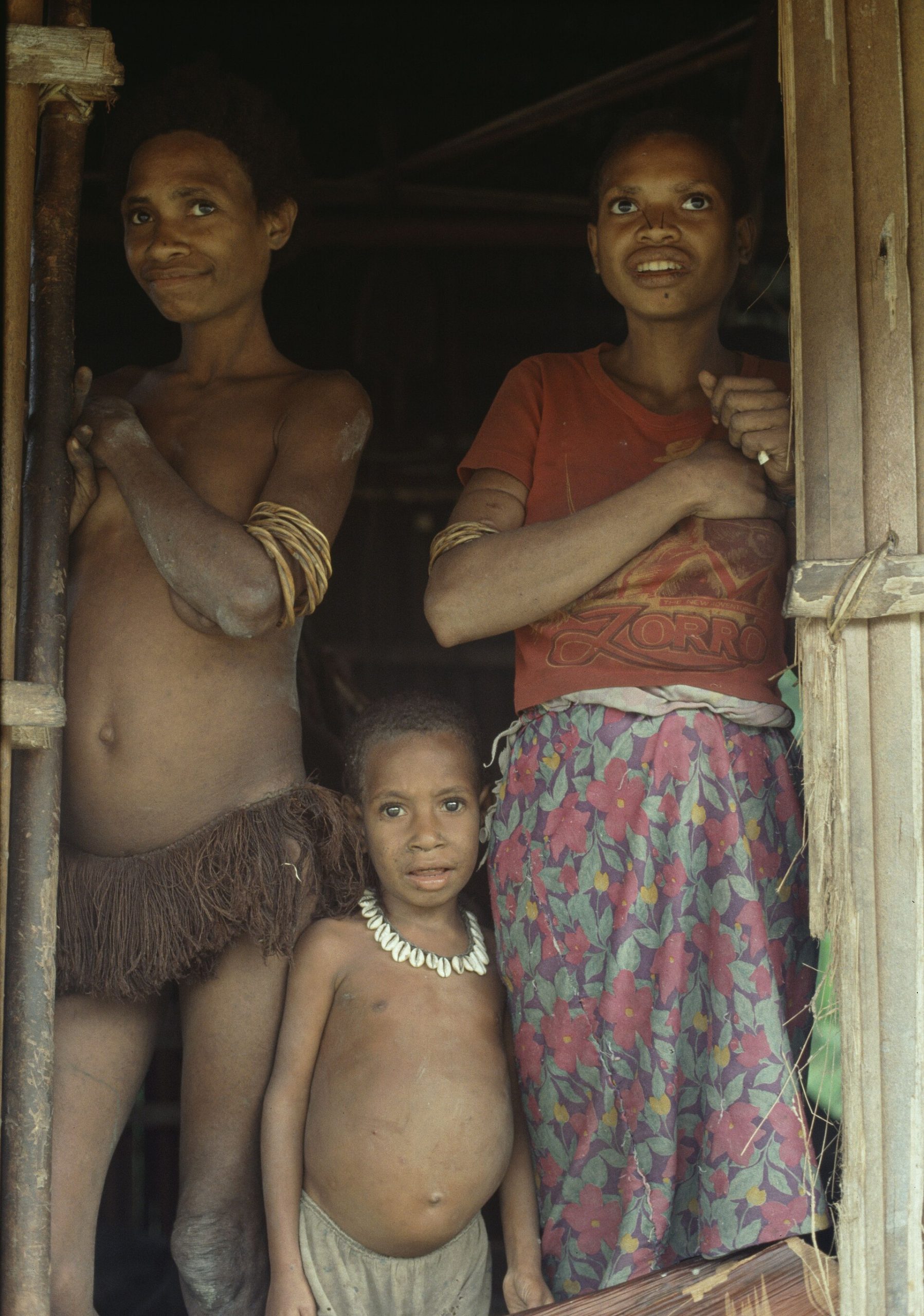
Photo: Two Korowai women with a child, photographed in Papua in 1992. By Willem Theodoor van Oijen, Wikimedia Commons, CC BY 4.0.